



|
|

|
|

|
|

|
|

|
|

|
|

|
|

|
|

|
|

|
|

|
|

|
|

|
|

|
|
 |
|

|
|
Hedgerley Village Survey
PROJECT 2009-4 : FEBRUARY 2009 TO MAY 2014
AIM: To survey listed buildings in the South Buckinghamshire village of Hedgerley, producing scale drawings and historic buildings analyses.
PROJECT TEAM: Peter Marsden, Marian Miller, Andrew Muir, Michael Rice, Hilary Stainer.
COORDINATOR: Michael Rice (Hedgerley Historical Society)
PROJECT STATUS:
- Four listed buildings were surveyed: Shell House, The White Horse pub, the Garden House, and Old Keepers.
- One house was dated to 1484-7 by tree-ring analysis: the Old Quaker House.
- The first report, on Shell House, was published in Records of Buckinghamshire in 2013.
The village of Hedgerley, three miles south-east of Beaconsfield, is not mentioned by name in the Domesday survey of 1086 because at that time it was a 'daughter estate' of Eton. Church records start in 1237. Hedgerley has no fewer than 26 listed buildings, ranging from a humble cartshed to a fully oak-framed former farmhouse. Apart from the church, the oldest is believed to date from the 15th century.
For each building the project team aimed to produce detailed scale floor
plans, photographs of elevations, and a historical analysis of its development. The detailed
results would be placed both in the BAS Library in Aylesbury and on the Buckinghamshire Historic
Environment Record.
Summary reports on each building will appear on this website.
|
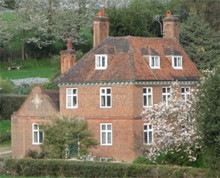
SHELL HOUSE: This is a late 17th-century Renaissance house with a decoratively gabled single-storey side extension added in 1905. The puzzle is that Shell House appears to be only half a house: where standard 17th-century design would have produced a symmetrical facade with a central doorway, Shell House is asymmetrical. So what happened to the other half? |
|
|
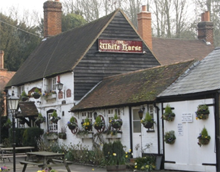
THE WHITE HORSE: Many pubs work hard to preserve ‘olde world charm’. While this can lead to the preservation of ancient timber frames and other historical features, it can just as easily bring misleading later additions. The White Horse is believed to be an 18th-century building, mainly brick but with an oak-framed roof. The bar is wonderful with oak beams... but are these original? |
|
|
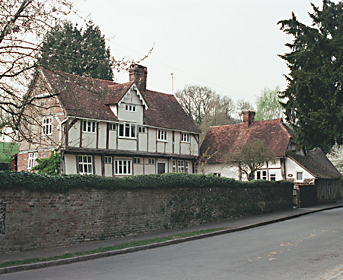
THE OLD QUAKER HOUSE: Eight samples were taken from the timber frame of the Old Quaker House, which has long been considered the oldest building in the village after the church. Analysis of the tree-rings in five of these samples gave a construction date for the main range of the house between 1484 and 1487. |
|
|
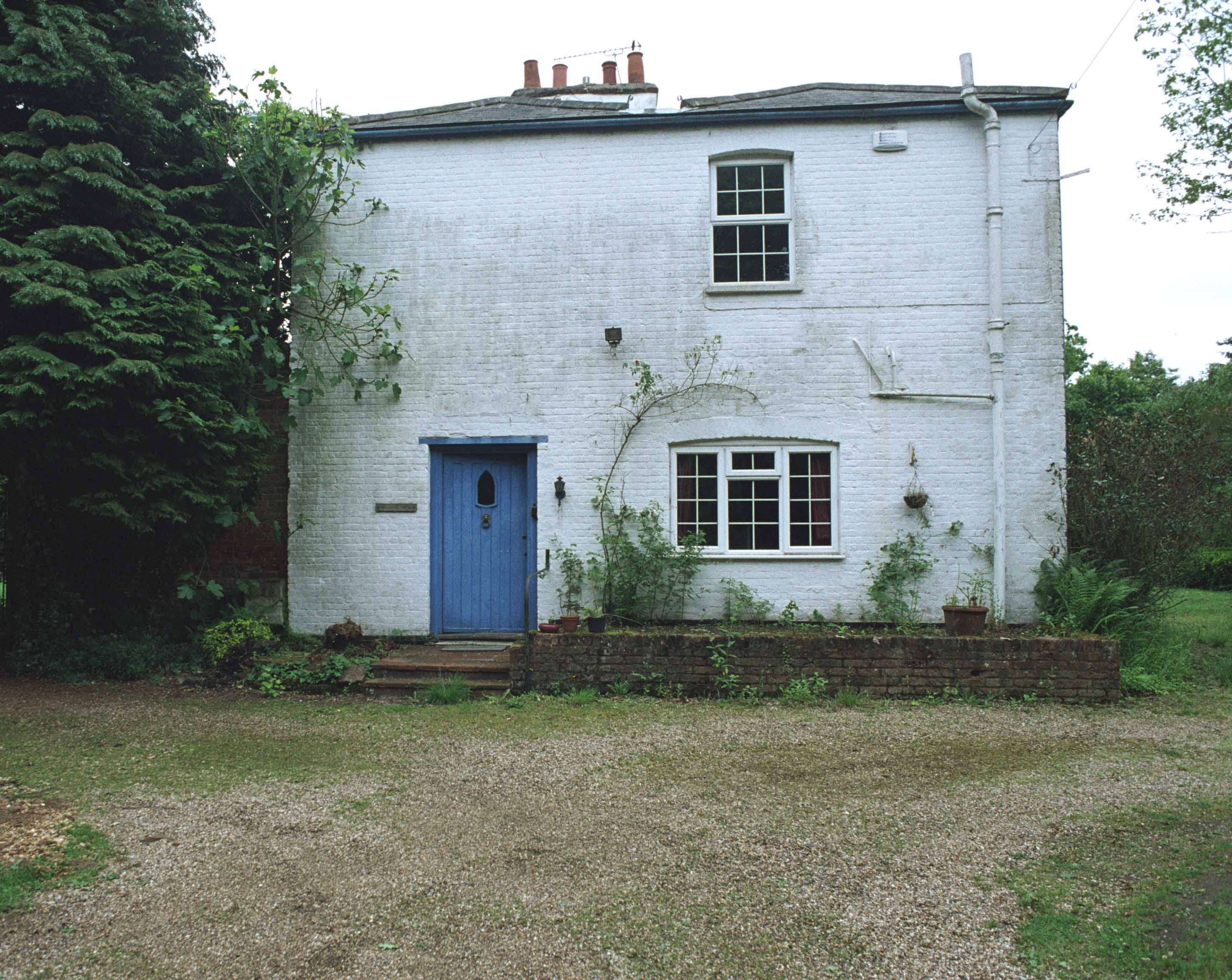
THE GARDEN HOUSE: The Garden House was scheduled for demolition in summer 2010, but fortunately there was time for a survey. The building itself is now gone. Built in the early 19th century as a garden workshop and store, the Garden House was part of the walled garden for the Hedgerley Park Estate, but it had suffered several out-of-keeping extensions and alterations during the 20th century and was not considered worth preserving. |
|
|
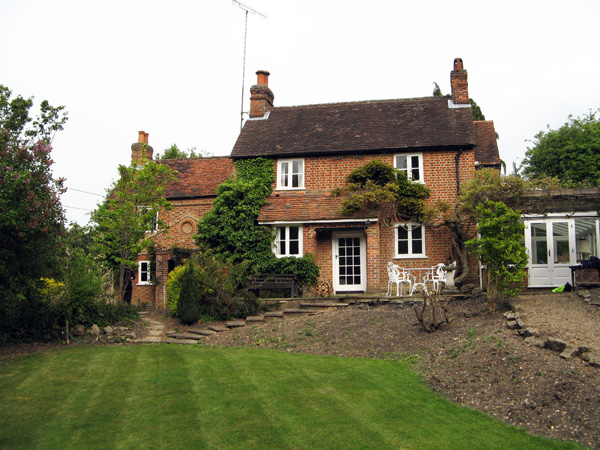
OLD KEEPERS: Today one cottage, both the survey and documentary research proved that Old Keepers had a chequered history. Originally it was two cottages, and several curious architectural features seem to indicate that at least part of the building is an ‘advertising hoarding’ from when the part of Hedgerley's brickmaking industry. |
|